
Definition of a Eunuch
While reviewing the history of eunuchs, we came across two types. The first was a congenital eunuch, one born with ambiguous genitals. A congenital eunuch is also referred to as a hermaphrodite, intersex, or a natural eunuch. The second type was a man-made eunuch, one who has been emasculated by human action. Also referred to as a transsexual. When we talk about eunuchs, we are referring to the congenital eunuchs only. We consider transsexuals and transvestites to be male persons adopting a different role than the one they were naturally born with.
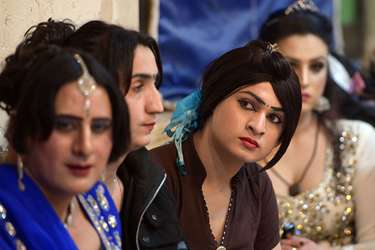
Eunuchs of the Subcontinent
Eunuchs have a history that spans back thousands of years. It is well known that eunuchs played an important role during the Mughal era in the Indian subcontinent. In the olden days, eunuchs enjoyed a high station in society, very unlike the eunuchs of today, who are shunned by society. Eunuchs had access to royal palaces where they were employed and respected as loyal guards, administrators, teachers of liberal and military arts, warriors, treasurers, and faithful servants.

Inheritance Under Islamic Law
There seems to be some confusion in society, regarding the inheritance rights of eunuchs. It is important to note here that there is no dispute about the rights of inheritance of the transvestites (zenanas) or the trans-genders (nirbans; castrated men), as they are males who have been castrated or dress up like women. They are entitled to a male person’s share in their inheritance. The persons whose inheritance rights are disputed are eunuchs (khusras, hermaphrodites, or intersex individuals) because it is difficult to ascertain whether they should get the share of a male or a female under Islamic Law. It may come as a surprise to some, however, eunuchs have inheritance rights under Islamic Law.

Supreme Court Judgements
In 2009, Aslam Khaki, the Chairman of Islamic Welfare Trust, and an attorney specializing in Islamic law, petitioned the Supreme Court of Pakistan to protect the hijra community’s constitutionally guaranteed right to equal treatment before law. The petition stressed that the rights of the hijra community were being collectively violated by their families and society in general. They are rejected by their families and discriminated, marginalized and shunned by society. They are neglected by the government and the police force maltreats and harasses them. The petition asserted that this treatment was a violation of their fundamental rights. In July 2009, the Supreme Court took up a petition under Article 184(3) of the Constitution, ordering all four social welfare secretaries to conduct surveys with a view to documenting the number of eunuchs across the country; and to recommend measures that would fully integrate eunuchs into the society.